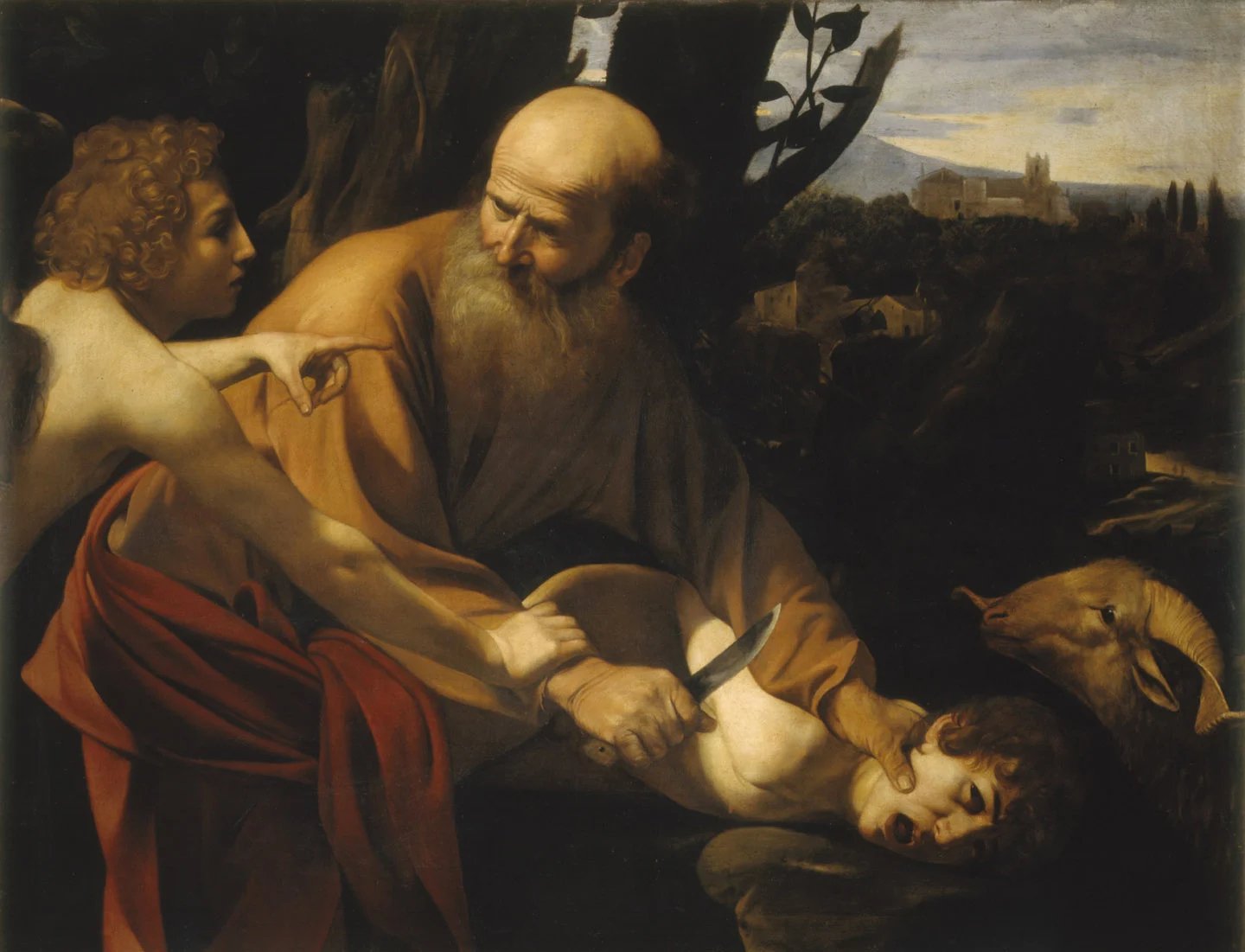
“The Knight of Faith is obliged to rely upon himself alone, he feels the pain of not being able to make himself intelligible to others, but he feels no vain desire to guide others. The pain is his assurance that he is in the right way, this vain desire he does not know, he is too serious for that. The false knight of faith readily betrays himself by this proficiency in guiding which he has acquired in an instant. He does not comprehend what it is all about, that if another individual is to take the same path, he must become entirely in the same way the individual and have no need of any man’s guidance, least of all the guidance of a man who would obtrude himself. At this point men leap aside, they cannot bear the martyrdom of being uncomprehended, and instead of this they choose conveniently enough the worldly admiration of their proficiency. The true Knight of Faith is a witness, never a teacher, and therein lies his deep humanity, which is worth a good deal more than this silly participation in others’ weal and woe which is honoured by the name of sympathy, whereas in fact it is nothing but vanity. He who would only be a witness thereby avows that no man, not even the lowliest, needs another man’s sympathy or should be abased that another may be exalted. But since he did not win what he won at a cheap price, neither does he sell it out at a cheap price, he is not petty enough to take men’s admiration and give them in return his silent contempt, he knows that what is truly great is equally accessible to all.”
What is education? /
“I should suppose that education was the curriculum one had to run through in order to catch up with oneself, and he who will not pass through the curriculum is helped very little by the fact that he was born in the most enlightened age.”
Two nieces, brother, and mother /


Family portraits made during my visit to Gaborone, Botswana, in July, 2022.
Where does it all lead to, this unending war waged by Power against the other authorities which society throws up? /
“In the destruction of all other command for the benefit of one alone–that of the state. In each man’s absolute freedom from every family and social authority, a freedom the price of which is complete submission to the state. In the complete equality as between themselves of all citizens, paid for by their equal abasement before the power of their absolute master–the state. In the disappearance of every constraint which does not emanate from the state, and in the denial of every pre-eminence which is not approved by the state. In a word, it ends in the atomization of society, and in the rupture of every private tie linking man and man, whose only bond is now their common bondage to the state. The extremes of individualism and socialism meet: that was their predestined course.”
"It's about the perception of men. It's about redefining what being a man is." /
“We know that men have been the problem for lo these many millennia.”
CBC Radio reporter Kiran Singh lets open misandry go unchallenged in today’s broadcast of CBC Radio’s Early Edition. If you’re not immediately outraged by Lichte’s claim, substitute the word “men” for “women,” “blacks,” “Jews,” or “gays” and read the statement out loud.